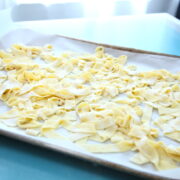
Homemade Gluten Free Pasta
Only two ingredients to make unbelievably delicious Homemade Gluten Free Pasta. No special equipment required either!
Print
Pin
Email
Share
Rate
Servings: 8 servings
Calories:
Ingredients
- 2 cups Carol's or Cup4Cup brand gluten-free flour - plus extra for rolling
- 5 eggs - Updated from 4 to 5 in 2025
- 1 egg yolk
- salt to taste
- 1 recipe Meat Sauce
Instructions
- Line a large baking sheet with parchment paper and dust lightly with flour. Set this aside near your work surface for making the pasta.
- Create a mound of flour then make a large well in the middle. Pour all of the eggs, the egg yolk and the salt in the well.
- Use a fork to break up and beat the eggs in the center while gradually pulling in flour from the sides. Continue to gradually bring more and more flour into the egg mixture until it is all combined well. If the eggs manage to break through the mound of flour, no need to worry, just do your best to pull it all together until a ball of dough forms.
- Work the dough with your hands until a soft ball of dough comes together. Cut the dough into 4 roughly even pieces. Work with one quarter at a time while keeping the rest covered in plastic.
- Dust the surface of a clean & dry countertop, a rolling pin, and all sides of the ball of dough with gluten-free flour. Use the rolling pin to roll the dough into a rectangular shape. Lift the dough and continue to dust with flour as you roll it out to prevent sticking.
- Once rolled as thin as possible. I try to roll it to the thickness of a few sheets of paper. Then take a sharp paring or chef’s knife or pizza cutter and cut long strips approximately ¼-½ inch wide across the dough. This is rustic so don’t worry about cutting perfectly straight lines.
- Pile the cut pasta on the floured parchment paper and dust lightly with additional flour if it is sticky.
- Continue rolling and cutting the remaining dough until all dough is rolled and cut.
- Bring a large pot of well-salted water to a boil. Carefully transfer all of the pasta into the boiling water and gently stir with a spoon to prevent sticking. Let boil for 1-3 minutes (depends on the thickness of the pasta).
- Check for doneness, remove the pasta with tongs and place directly into your preferred warmed sauce to coat the pasta and serve. Or plate and drizzle with olive oil, salt, pepper and fresh grated parmesan cheese.